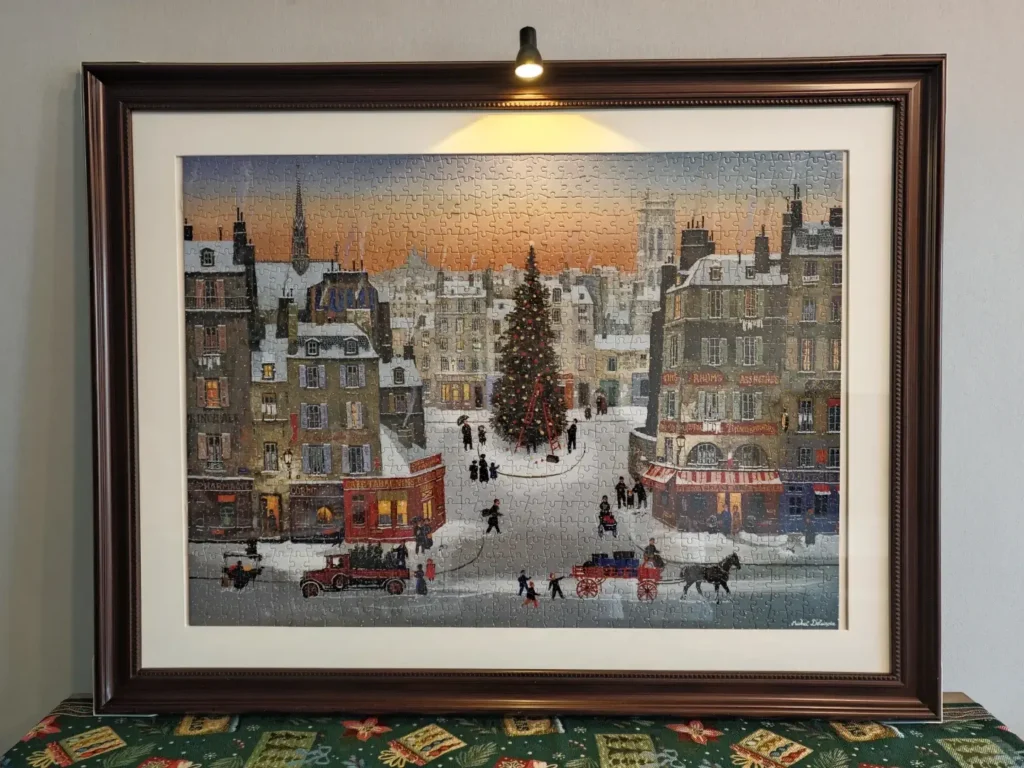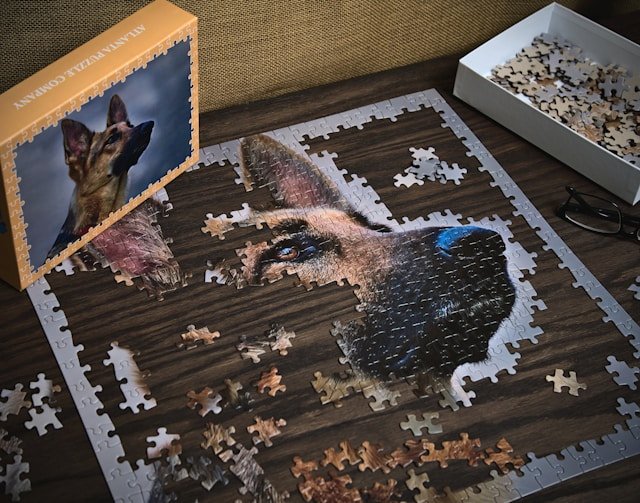
Finishing a jigsaw puzzle is incredibly satisfying. After hours of clicking pieces into place, the last thing you want to do is break it apart and put it back in the box.
Learning how to glue a puzzle is the best way to preserve your hard work. A clear adhesive bonds all the pieces together, protects the image, and turns your finished puzzle into a permanent keepsake you can hang on your wall.
Why Should You Glue Your Puzzle?
Sealing your puzzle comes with some great benefits:
- Lock Everything in Place: Glue acts like an invisible anchor, bonding all those tiny pieces into one solid board. No more worrying about accidental bumps or pieces falling apart when you move it.
- Protect the Artwork: Glue creates a clear protective layer that prevents colors from fading and keeps the image looking sharp and vibrant for years to come.
- A Cleaner, More Finished Look: Glue fills in the tiny gaps between pieces, making the surface look smooth and flat — almost like a real painting.
What is the Best Glue for Puzzles?
Gluing a puzzle isn’t just about slapping glue everywhere — it’s about using the right product the right way. Here are your best options:
- Dedicated Puzzle Glue Specialized products (like MasterPieces or Ravensburger glue) are designed specifically for puzzles. They brighten colors, often come with a built-in brush for an even coat, and dry faster than regular craft glue. The thicker formula also means it won’t seep through to the back.
- Mod Podge (A Popular Alternative) Mod Podge is a popular all-in-one option that works brilliantly for puzzles. It’s a strong adhesive that locks pieces together and dries completely clear — doubling as a protective top coat for your finished image.
- DIY Options- White Craft Glue No puzzle glue on hand? Plain white craft glue is a great backup. It dries completely clear, so it won’t affect your puzzle’s design. The white color is actually helpful — it lets you see exactly where you’ve applied it so you don’t miss any spots. It also dries to a smooth, matte finish with no water streaks.
- Backing Sheets Prefer to skip the liquid mess? Puzzle saver sheets are the easiest way to mount a puzzle without glue while keeping the front perfectly clean. A4 adhesive sheets work great, but kitchen grease-proof stickers or wide packing tape do the job too. This method keeps the puzzle flexible and easy to take apart and store later.
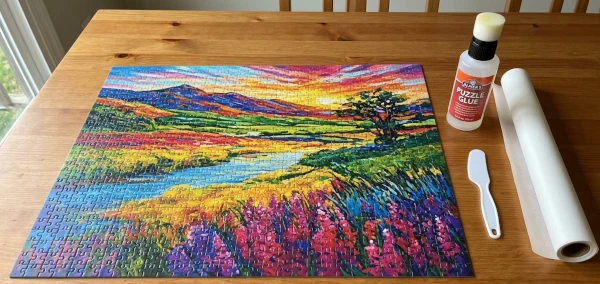
What You Will Need
Before you start, grab these essentials:
- A large piece of cardboard (to slide and move the puzzle easily)
- Your chosen glue (puzzle glue, Mod Podge, or white craft glue)
- A plastic spreader or old credit card (to spread the glue evenly)
- Plastic film or wax paper (to protect your table)
- A clean, flat workspace (a smooth tabletop or tile floor works best)
How to Glue a Jigsaw Puzzle (Step-by-Step)
Step 1: Prepare Your Workspace
Start with a clean, flat surface — a tile floor or smooth tabletop is ideal. Lay down plastic film to catch any drips and protect your furniture. Then use a large piece of cardboard to carefully slide your completed puzzle onto the workspace.
Step 2: Clean and Flatten
Wipe the puzzle surface with a dry cloth to remove any dust or hair. Press down firmly with your hands to make sure all pieces are tight and flat — this prevents glue from leaking through. If you have a rolling pin, give it a gentle roll for an extra smooth surface.
Step 3: Apply the Glue
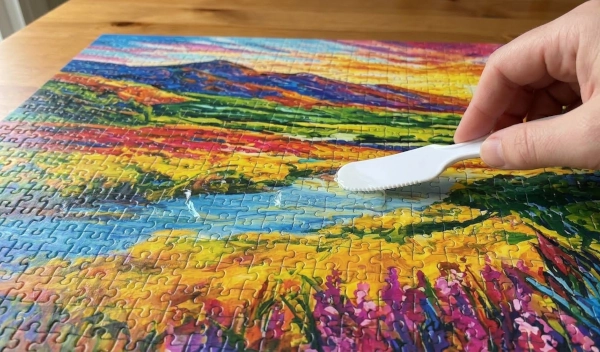
Pour a small amount of glue onto the center of the puzzle. Use your spreader to push it evenly into every crack, working from the middle outward. When you reach the edges, pull the glue inward so it doesn’t spill over the sides. Keep the layer thin — scrape away any excess to keep the surface flat and clean. Make sure every piece is covered!
Step 4: Let It Dry
Most puzzle glues take 4 to 5 hours to dry, but leaving it overnight is the safest bet. Once dry, lightly touch the surface — if it feels smooth and completely non-sticky, you’re good to go!
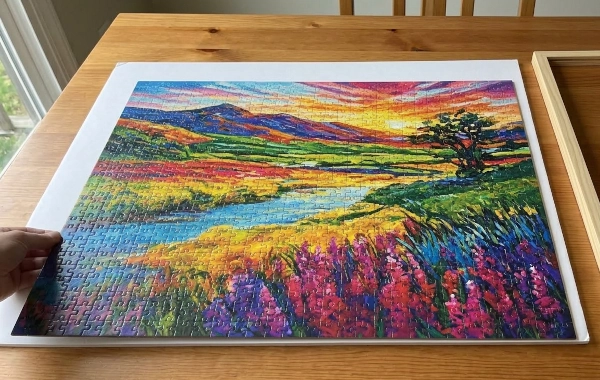
Next Step: Displaying Your Masterpiece
Now that your puzzle is sealed and solid, it’s time to show it off! Head over to our guide “How to Frame a Puzzle” for everything you need — from prepping your puzzle for a frame to picking the perfect style, step-by-step.
FAQs
- What’s the best way to glue a puzzle? Pour specialized puzzle glue directly onto the front, spread it evenly into all the cracks with a plastic spreader, and let it dry. Simple as that!
- Do you glue the front or back of a puzzle? Most people glue the front — it creates a protective layer and makes the colors pop. Gluing the back is a good option if your puzzle has special textures like glitter or foil that you don’t want to cover. Tape on the back is also a mess-free alternative that makes the puzzle easy to store later.
- What are common puzzle gluing mistakes?
- Gaps: Pieces that aren’t tight together will let glue leak through to the table.
- Uneven coating: Missed spots mean those pieces won’t bond and the puzzle may fall apart.
- Too much glue: A thick layer can cause warping and takes much longer to dry.
- Wrong surface: Never put paper under your puzzle while gluing — if glue seeps through, the paper will permanently stick. Always use a plastic sheet or tile floor.
- Can you glue a puzzle with normal glue? Absolutely! Plain white craft glue works great. It dries clear and leaves a smooth matte finish. Give it a try!