You’ve just finished a beautiful jigsaw puzzle, and now you’re wondering: Can I actually turn this into wall art? The answer is absolutely yes — and learning how to frame a puzzle is easier than you might think. But here’s where most people get stuck: How do you get your puzzle into a frame without it falling apart?
That’s exactly what this guide is for. We’ll walk you through everything step-by-step — from preparing your puzzle for framing (with glue or without), to choosing the right frame for your size. Whether you want a permanent display piece or prefer to keep your options open for taking it apart later, we’ve got you covered. And if you’re still new to puzzling altogether, make sure to check out our The Ultimate Guide to Jigsaw Puzzles for Beginners before you start — nailing the basics makes the whole framing process so much smoother!
Let’s turn that puzzle into something you’ll be proud to show off.
Before Framing Your Puzzle
It’s best to assemble your puzzle on a movable, sturdy board such as cardboard or foam board. Choose a board that’s slightly larger than your puzzle so you’ll have enough space to lift, move, and flip it during the framing process.
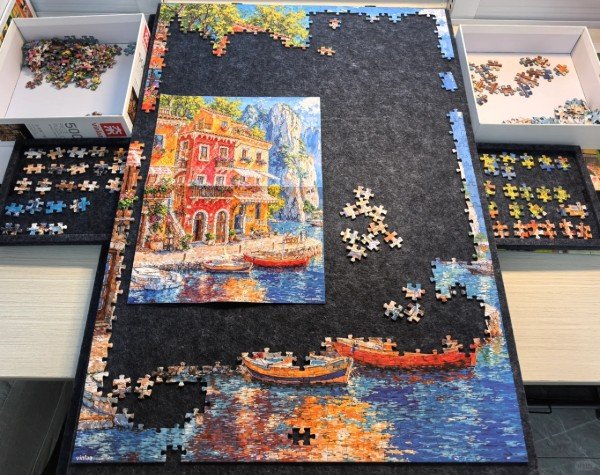
If you completed your puzzle on a table, don’t worry — you can still move it safely. Gently separate the puzzle into a few large sections and transfer them onto the board one section at a time. Once everything is in place, carefully fit the sections back together to restore the full image.
Make Sure Your Puzzle Is Completely Flat
After finishing your puzzle, you may notice that some sections start to lift or bulge slightly. While you can press them down with your hands, the pieces may not lie completely flat or fit together as tightly as before.
In this case, use a long cylindrical object — like a rolling pin — to gently roll over the surface of the puzzle and flatten it evenly. This helps the pieces settle into place and creates a smoother surface for framing.
Next, let’s look at two different approaches — with adhesive and without. Choose the method that best fits your situation and how you plan to display your puzzle.
Framing a Puzzle Without Any Adhesive (No Glue or Tape)
If you’d like the flexibility to redo your puzzle later, give it to someone else, or even resell it, this method lets you frame it safely without any damage.
Here’s what you’ll need: Just the acrylic (or glass) sheet that comes with your frame—that clear protective panel on the front.
- The sandwich flip technique.
Remove the acrylic panel from your frame and carefully place it on top of your finished puzzle. Now you’ve got a puzzle sandwich: the backing board on the bottom, your puzzle in the middle, and the acrylic sheet on top.
Here comes the tricky part—but don’t worry, it’s easier than it sounds. Firmly hold both sides of this sandwich and quickly flip the whole thing over while applying gentle, even pressure. Once you’ve flipped it, lift away the board that was originally underneath. Your puzzle should now be face-down, resting cleanly against the acrylic sheet.
- Lower it into the frame.
Carefully place the acrylic sheet (with the puzzle stuck to it) into the frame, moving slowly so the pieces don’t shift. Then secure the backing board in place and snap or lock the frame closed.
Two helpful tips:
- Get a second pair of hands. This process is so much easier with two people. One person can hold while the other flips, which keeps everything aligned and prevents pieces from sliding around or falling out.
- Size matters. Try to use a frame that fits your puzzle as closely as possible. If there’s extra space, tuck some paper or cardboard along the top edge to fill the gap and keep the puzzle snug.
Framing a Puzzle With Adhesive
Using Liquid Puzzle Glue
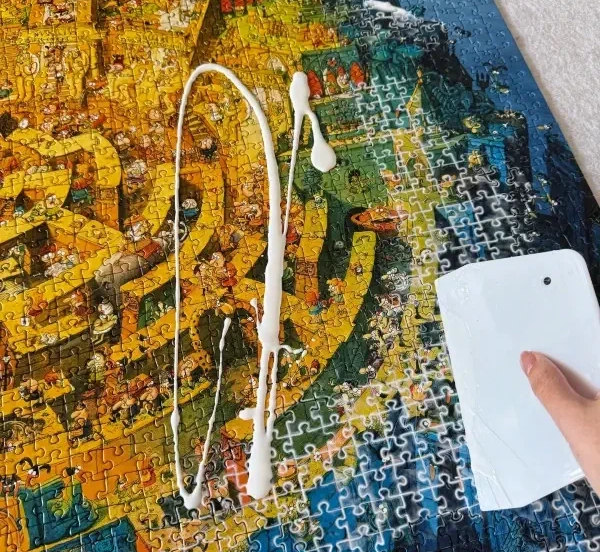
- Start with the right glue. Use the adhesive that came with your puzzle, or grab a puzzle-specific glue that’s acid-free and low in moisture. This matters more than you might think—if your glue has too much water in it, your puzzle pieces can actually swell up, warp, or start peeling over time. A low-moisture formula keeps everything smooth and prevents damage down the road. Mod Podge is a popular choice, and most craft glues designed for paper projects work great too. If you’re not sure which adhesive to choose or need a more detailed tutorial on the gluing process, check out our comprehensive guide: How to Glue a Puzzle: The Best Way to Seal and Preserve It
- Get your tools ready.You’ll need something sturdy to spread the glue evenly—an old credit card or a similar scraper works perfectly.
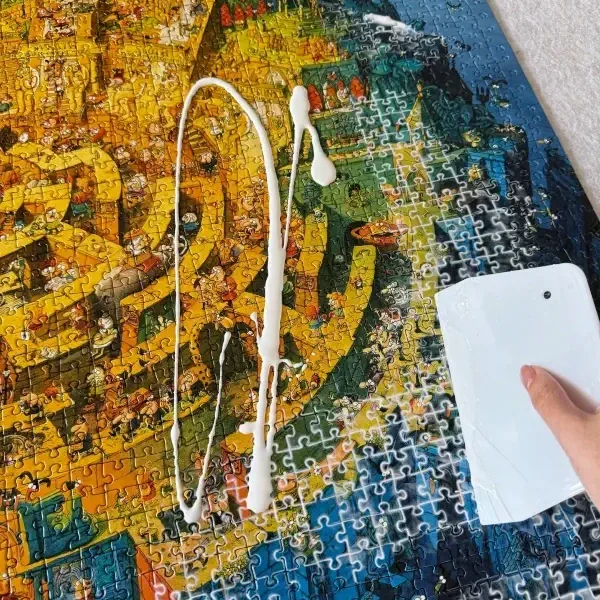
- Apply a thin, even layer.Here’s where a lot of people mess up: they use way too much glue. You want just enough to cover the entire surface and fill the tiny gaps between pieces, but not so much that it pools or drips. Too much glue can cause your puzzle to warp or curl at the edges, which defeats the whole purpose. Take your time spreading it evenly across the top.
- Let it dry completely.Follow the drying time on your glue’s instructions—don’t rush this step.
- Flip and repeat.Once the top is dry, apply another layer on the back of the puzzle. This second coat does double duty: it makes the bond much stronger and can actually fix any slight warping or curling that happened during the first application. Once both sides are completely dry, you’re all set!
Using Puzzle Saver Sheets or Tape
Not a fan of glue? Try adhesive sheets or tape instead. Some people find that glue gets messy—and honestly, it can turn into a bit of a disaster if you’re not careful. If you want a cleaner, less stressful option, adhesive sheets or even regular tape work surprisingly well. And here’s the best part: you don’t even need to buy specialized puzzle adhesive sheets. Everyday items like packing tape or shelf liner can do the job just fine.
Here’s how to do it without ruining your puzzle. First, create a “puzzle sandwich” by placing your completed puzzle between two sturdy boards—this keeps all the pieces locked in place. Carefully flip the whole thing over so the back of the puzzle is facing up. (Pro tip: do this on a flat surface and hold everything tight while you flip!)
Now cover the entire back with adhesive sheets or strips of tape, making sure every piece gets secured. Work methodically so you don’t miss any gaps—you want everything firmly attached.
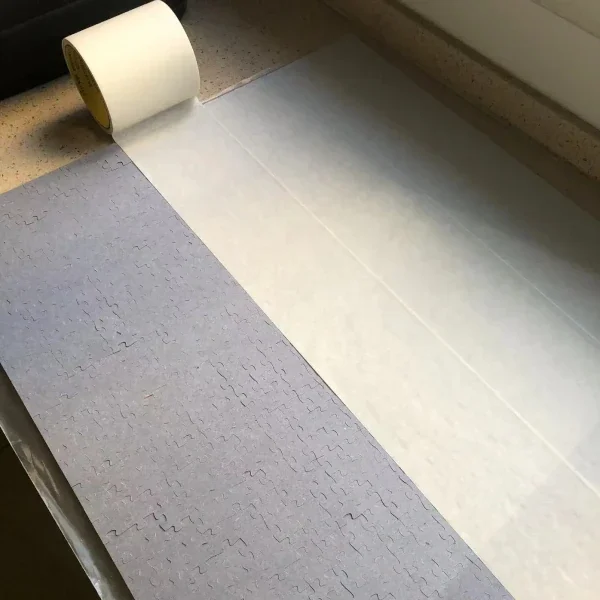
Once you’ve covered the back completely and everything feels solid, you’re done! Your puzzle is now ready to slide into a frame without falling apart.
Framing Your Puzzle
Measure Your Puzzle Before Buying a Frame
Although puzzle packaging usually lists the finished size, there are often small variations in reality, so it’s important to measure your puzzle yourself.
If you’re not using a backing board, simply measure the length and width and order your frame accordingly. Most standard puzzle thicknesses will fit into typical frames without any issues.
However, if you’ve added a backing board, make sure to measure the total thickness as well. In that case, you should purchase your frame based on all three dimensions — length, width, and thickness — to ensure everything fits properly.
FAQs
What’s the easiest way to frame a puzzle?
The simplest method is the no-glue sandwich flip. Just measure your puzzle, get a frame that fits, place the acrylic sheet on top, flip it over so the puzzle sticks to the clear panel, then lower it into the frame and secure the backing. No mess, no waiting—done in minutes.
Do I need a backing board?
Not necessarily, but it helps. A backing board gives your puzzle extra support and keeps it stable in the frame. If you decide to add one, just make sure to account for the extra thickness when choosing your frame—you’ll need one with enough depth to fit the puzzle plus the backing board comfortably.
What to do if my puzzle curls at the edges?
If your puzzle curls at the edges after gluing, apply a second layer of glue to the back once the front is dry. This balances the tension and usually flattens out the curling. You can also place something flat and heavy (like books) on top while it dries to keep everything pressed down and smooth.
Do I glue the front or back of a puzzle?
Glue the front first—it’s easier to spread evenly while you can see the image. Once that’s dry, flip it over and apply a second layer on the back for extra strength and to fix any curling that happened during the first coat. This double-layer method gives you the most durable result.