Ready to master the art of the puzzle? Whether you just finished your first 100-piece challenge or are looking to start from scratch, you’ve come to the right place.
At The Hobby Safari, we are dedicated to helping you discover new hobbies that spark joy and focus. In this complete guide, we’re skipping the fluff and diving straight into the essentials: from a quick look at the jigsaw game history to expert advice on how to choose jigsaw puzzles for beginners.
You’ll learn professional jigsaw puzzle instructions to get started and—for those who love a challenge—advanced speed puzzling tips to solve jigsaw puzzles like a pro. Let’s dive in!
Beyond the Pieces: What is Jigsaw Game?
A jigsaw game is a fun and satisfying game where you take a bunch of cut-up pieces from a single image and put them back together to recreate the full picture.
Jigsaw puzzles were actually invented by John Spilsbury, an English cartographer, back in the 1760s — originally as a creative tool to help children learn geography. Over time, puzzles evolved far beyond the classroom. Today, they’re enjoyed worldwide for entertainment and relaxation, and are even used in research fields like psychology and cognitive science.
Getting Started: How to Choose Jigsaw Puzzles for Beginners?
Starting your jigsaw puzzle journey can feel a little overwhelming with so many options out there — but don’t worry! Choosing the right puzzle makes all the difference, especially when you’re just starting out.
How Many Pieces Should a Beginner Start With?
Jigsaw puzzles come in a wide range of piece counts to suit all kinds of players. The most common sizes you’ll find on the market are 100, 300, 500, 1000, and even 2000 pieces or more.
For beginners, we recommend starting with a 300 to 500-piece puzzle. It’s the sweet spot — challenging enough to keep things interesting, but simple enough that you can actually finish it without losing your mind! Start small, build your confidence, and work your way up from there!
What Style and Image Should You Choose?
When it comes to picking your first puzzle, the image matters more than you might think! As a beginner, we recommend going for puzzles with bright, vibrant colors and clear, distinct sections in the image. The more color variety and detail an image has, the easier it is to sort your pieces and spot where each one belongs. At the same time, always make sure to choose an image that you personally love.
How to Buy a High-Quality Jigsaw Puzzle?
As a beginner, we recommend buying from a well-known brand to ensure you’re getting a good quality puzzle. Trusted brands like Ravensburger, EuroGraphics, Cobble Hill, and Galison all offer great 300–500 piece options that are perfect for beginners. Quality puzzles have sturdier pieces, cleaner cuts, and colors that are much easier to work with. Alternatively, you can also find some great deals by browsing your local thrift stores — you might just stumble upon a hidden gem at a fraction of the price!
Step-by-Step Jigsaw Puzzle Instructions: How to Put a Puzzle Together Fast?
Set Up Your Puzzle Space
A Large, Flat Surface
Before you even open the box, take a moment to think about where you’re going to work. Check the dimensions of your puzzle and make sure you have a large, flat, and sturdy surface that’s big enough to fit the completed image. A dining table or a desk usually does the job perfectly. This step is more important than it sounds — once you’ve spread all your pieces out and started puzzling, moving everything to a different spot becomes a real headache!
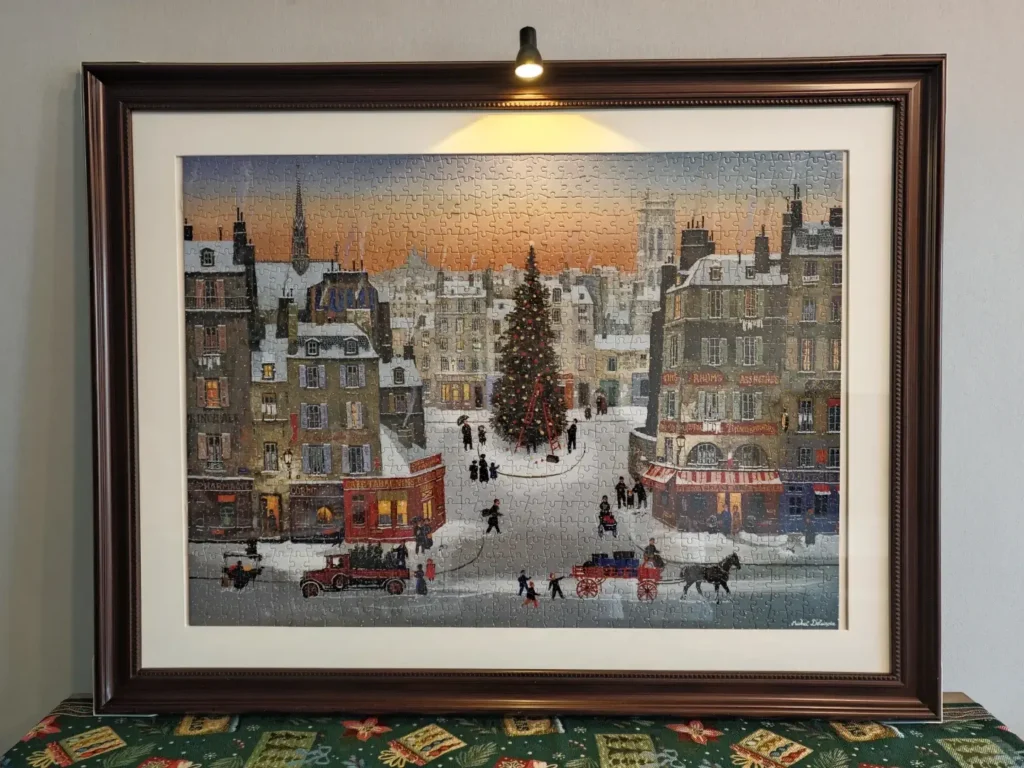
Pro Tip: If you can, try doing your puzzle on a puzzle mat or foam board. It makes moving your puzzle around so much easier, and it’s also perfect if you ever want to frame your finished work. Want to know more? Check out this article: How to Frame a Puzzle: A Step-by-Step Guide
Enough Lighting
Good lighting helps you spot subtle color differences and fine details that are easy to miss in a dim room. Natural light or a bright lamp works perfectly.
Enough Comfort
Make sure your chair and posture support your body well — puzzling can take a while, and physical comfort helps you stay focused and enjoy the process for longer.
Sort and Organize Your Pieces
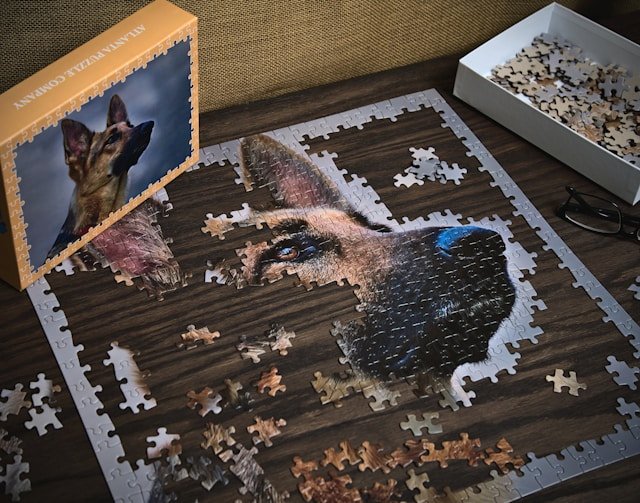
For beginners, taking the time to sort your pieces before you start is absolutely worth it! Begin by tipping all the pieces out and turning them all face-up as you go. Then, sort out all the edge pieces first and place them in their own container — you’ll need these in the next step. After that, sort the remaining pieces by color into separate trays. It might feel like extra work at the start, but trust us — it makes the puzzling process so much smoother and keeps everything nice and tidy along the way!
Pro Tip: When you hit a tricky section — usually areas with very similar or solid colors — try sorting those pieces by shape instead. It’s a game changer!
Build the Border First
Now the real fun begins! Start by grabbing your reference image — this is usually the picture on the box — and use it as your guide. Take all the edge pieces you sorted earlier and begin assembling the border of your puzzle. Edge pieces are easy to identify because they have at least one flat side, making them the perfect starting point. Once your border is complete, you’ll have a clear frame to work within, which makes tackling the rest of the puzzle so much easier and more organized.
Work Your Way to the Center
Filling in the middle is the most challenging part of any puzzle, so the key here is to work section by section rather than randomly picking up pieces from everywhere. Start with the most distinctive sections of the image first — areas with unique colors, bold patterns, or recognizable shapes are always the easiest to identify and place. Once those anchor sections are in place, use them as reference points to gradually fill in the surrounding areas until the full picture comes together.
Pro Tip: Never force a piece into place! If it doesn’t fit smoothly, try rotating it — and if it still doesn’t fit after all four rotations, it simply doesn’t belong there.
From Slow to Pro: Simple Speed Puzzling Tips for Beginners
- just start — and time yourself! Don’t overthink it. Set a timer and treat it like a fun personal challenge.
- Dump all pieces out and flip them face-up as you sort. Don’t worry if you can’t find every edge piece right away — they’ll turn up as you go!
- Spread your pieces out wide. The more visible they are, the faster you’ll spot matches.
- Feel free to jump between sections. No need to fully finish one area before moving to another — just work on whatever catches your eye.
- Enjoy the process!
Want even more speed puzzling tips? Check out the Speedpuzzling website for a whole community of puzzle enthusiasts and pro techniques!